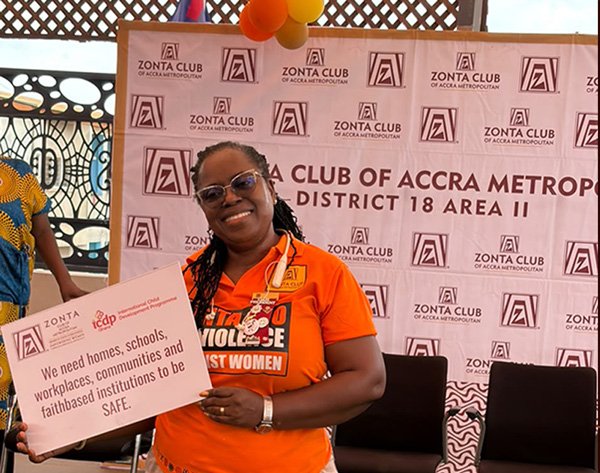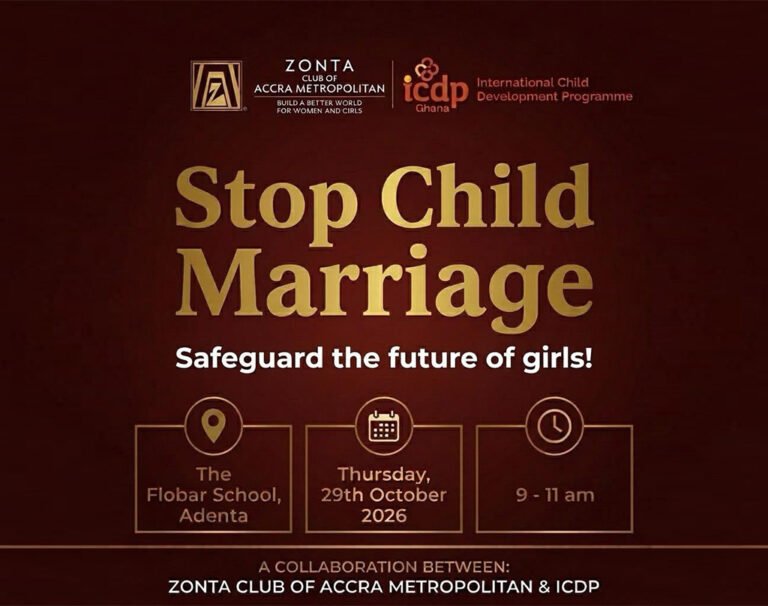
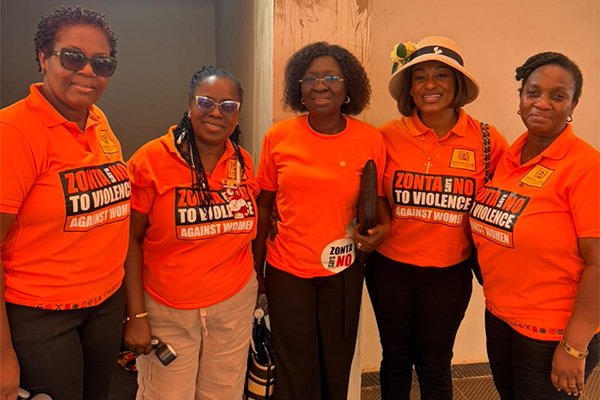

The Zonta Club of Accra Metropolitan (ZCAM), District 18, Area, in partnership with the International Child Development Programme (ICDP) Ghana, has intensified efforts to combat child marriage and promote child protection through a sensitisation programme for pupils of The Flobar School at Adenta in Accra.
The programme, held on Thursday, October 29, 2026, under the theme, “Stop Child Marriage: Safeguard the Future of Girls!”, sought to deepen awareness of children’s rights, highlight the dangers of early and forced marriage, and encourage stronger safeguarding practices in schools and communities.
The initiative comes against the backdrop of persistent concerns about child marriage in Ghana. According to UNICEF’s 2024 Country Profile for Ghana, 16 per cent of women aged 20–24 were married or in a union before the age of 18. This translates into approximately 2.5 million girls and women currently living in Ghana who were married before turning 18.
Addressing the pupils, President of the Zonta Club of Accra Metropolitan, Madam Adodo Abla Adih- Nuviadenu, emphasised that every child, particularly every girl, deserved the opportunity to access quality education, develop her potential and determine her future without fear of abuse, exploitation or discrimination.
She encouraged pupils to remain focused on their education, make informed decisions and avoid situations that could expose them to abuse and other forms of exploitation.
Madam Adih- Nuviadenu stressed that protecting children, especially girls, was a shared responsibility that required the active commitment of parents, teachers, school authorities, communities, government institutions and development partners.
She reaffirmed ZCAM’s commitment to advancing the rights and empowerment of women and girls through sustained interventions in education, health, child marriage prevention and safeguarding.
She noted that as the Club marked 20 years of service, it remained committed to building partnerships and implementing initiatives that would improve the welfare, dignity and opportunities of women and girls.
For her part, Country Director of ICDP Ghana, Madam Joyce Larnyoh, called for equal protection and opportunities for both girls and boys, stressing that every child deserved the chance to learn, lead and thrive without limitations.
She underscored the importance of raising children in environments free from violence, discrimination and harmful practices, noting that protecting children’s rights was fundamental to building an equitable society.
“An equal future starts with protecting them,” she emphasised.
The Programme Manager of ICDP Ghana, Nana Adwoa Afriyie Bonsu, highlighted the critical role of safeguarding in ensuring that schools provided safe and supportive environments for teaching and learning.
She explained that school safety extended beyond the physical condition of classrooms and school infrastructure to include health and hygiene, emotional well-being, and protection against abuse, discrimination, bullying and sexual harassment.
She urged school authorities to strengthen their safeguarding systems, establish clear reporting mechanisms and ensure that all children were protected from every form of harm within the school environment.
Importantly, the resource persons engaged the pupils in practical discussions and real-life scenarios to help them recognise situations that could constitute abuse, exploitation or attempts to force a child into marriage. The children were guided on when to speak up, how to report incidents and whom to approach for assistance, including trusted adults and appropriate school and child protection authorities.
The interactive sessions were designed to equip pupils with the confidence and practical knowledge to seek help, report concerns early and understand that they should never remain silent when their safety or the safety of another child is threatened.
A gender and human rights advocate, Madam Esther Darko-Mensah, drew attention to the far-reaching consequences of child, early and forced marriage, describing the practice as a serious threat to girls’ education, health, dignity and long-term opportunities.
She said child marriage deprived girls of the freedom to make decisions about their own lives and often exposed them to early pregnancy, health complications, abuse and the loss of educational opportunities.
Madam Darko-Mensah emphasised that children were rights-holders whose dignity, opinions and aspirations must be respected. She urged parents, guardians and teachers to fulfil their responsibility to protect children and ensure that no child was coerced or forced into marriage.
She also called for sustained public education on children’s rights and stronger collaboration among families, schools, communities and relevant institutions to prevent harmful practices and hold perpetrators accountable.
The programme forms part of broader efforts to promote the rights, safety and empowerment of girls and to encourage schools and communities to take a more proactive role in preventing child marriage and all forms of violence against children.
The International Day of the Girl Child, observed annually on October 11, provides an important platform for highlighting the challenges girls face in accessing education, protection and equal opportunities, while mobilising action to advance their rights. The ZCAM-ICDP initiative reinforces the need for sustained investment in child protection, education and community awareness, recognising that safeguarding girls today is essential to securing a more equitable and prosperous future for Ghana.