CSOs join hands to speak up on Gender-Based Violence (GBV) against women with disabilities.
Zonta Club of Accra Metropolitan (ZCAM) in collaboration with The Voice of Women and Children with Disabilities Ghana (VOWACGhana) and International Child Development Program (ICDP) has called on the government to urgently reform national policies and strengthen protection systems in response to the growing level of violence, discrimination and digital abuse faced by women and girls living with disabilities across the country.
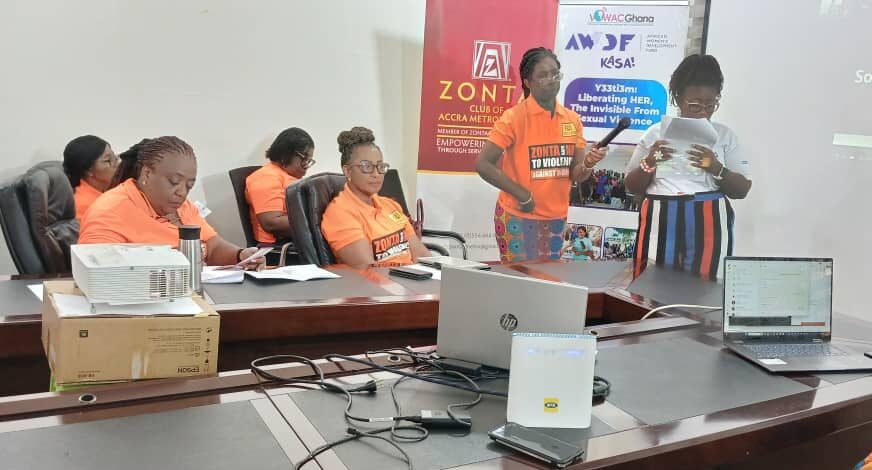
Speaking at a forum on the theme “Gender-Based violence towards women and girls with and without disabilities” which was organized to mark the launch of the 2025 *16 Days *of Activism Against Gender-Based Violence, the advocates noted that the rapid digitisation of society has introduced new forms of harm that disproportionately affect vulnerable groups, in particular, women and girls with disabilities. They argued that such people face intersecting inequalities that make them more likely to be targeted and less likely to access redress, as most reporting systems were not accessible to them.
They mentioned that many online platforms lack sign language support, screen-reader compatibility or accessible safety features, leaving survivors isolated and silenced.
The participants also raised concerns about gaps in Ghana’s cybersecurity legislation, saying the lack of provisions protecting women and girls with disabilities “exposes them to significant danger and exploitation.”
The organisations noted that Ghana currently does not seem to have any specific policy compelling website or digital platform developers to make online services accessible to persons with disabilities.
Mrs. Dorothy Tackie, the President of the Zonta Club of Accra Metropolitan (ZCAM), called for renewed national commitment to address the heightened levels of violence experienced by women and girls with disabilities, stressing that Ghana must “act now” to end all forms of abuse and exclusion.
She expressed concern that women and girls living with disabilities faced disproportionately higher levels of abuse, compounded by stigma, discrimination and structural barriers that limit their access to support services.
Mrs Tackie emphasised that gender-based violence extended beyond physical harm to include emotional, psychological, economic and systemic abuses.
She catalogued some of the barriers as inaccessible shelters, lack of interpreters for hearing-impaired survivors, cultural norms that blame victims and slow institutional responses to cases of exploitation, particularly of girls with intellectual disabilities which she noted were just a few examples.
She said ZCAM, which is a member of Zonta International remained committed to supporting efforts aimed at creating a country where every woman and girl, regardless of disability status, enjoyed equal rights, safety and dignity.
This, she added, required stronger policies, better-resourced institutions, community attitudinal change and the integration of disability-inclusive measures in national anti-GBV strategies.
Mrs Tackie called for enhanced collaboration among civil society, government agencies and the public, noting that the Ministry of Gender, Children and Social Protection can not win the fight alone.
She urged the media to give greater visibility to cases of violence against women and girls, particularly those with disabilities, and to treat such issues with the urgency they deserved.
In a presentation on ‘Strengthening Partnership to end Digital and other forms of violence against women and girls with and without Disabilities’ Madam Patience Atipoka Atua, Programme Manager at VOWACGhana said studies from UNICEF, WHO and UN Women consistently show that women with disabilities were two to three times more likely to experience violence than those without disabilities.
She noted that violence against women with disabilities was not limited to physical spaces but has expanded into the digital realm, where online gender-based violence was emerging as a modern epidemic.
She said GBV remains a major concern citing inaccessible police stations, shelters and reporting systems that excluded women with disabilities.
VOWACGhana outlined four priority recommendations for government and relevant institutions including: 1)Enactment of specific national legislation on online Gender-Based Violence, 2)Mandate universal accessibility in all GBV support service, 3)invest in disaggregated data and research and 4)implement mandatory intersectional training for justice actors.
She encouraged women with disabilities to speak up, share their experiences and actively participate in the 16 Days of Activism, adding that their voices were essential to shaping effective national responses.
Madam Nana Adwoa Afriyie Bonsu, Program Manager of ICDP narrated her real-life story of difficulties her sibling with disability was subjected to by caregivers and other service providers who even though meant well were completely ignorant about how to safeguard the rights of people with disabilities. She called on Government to increase efforts on data collection, availability and accessibility and the need to focus more on ethical considerations in reporting GBV especially on confidentiality and children. She explained that without representative data, targeted solutions, policy and planning will continue to be misdirected.
Organizer